
OnlyFans Chatting Scripts: Why the Good Ones Aren’t Scripts
Fans spot a scripted inbox within three messages. What a professional chat team uses instead: a structure for openers, the selling line, the no and the re-open, with short example exchanges to show the shape.
Written by Jonathan F. Published
Every week someone asks us for our chatting scripts, and every week the answer disappoints them: there is no folder of scripts, because a scripted inbox is the fastest way to lose the fans who spend most. What there is instead is a structure, and a structure is not the same thing.
This post explains the difference and then hands over the structure. It is how our chatters are trained, and it works just as well for a creator answering her own messages. For what a chatter’s shift actually looks like, read what OnlyFans chatters do all day; this is the part of that job that happens inside a single reply.
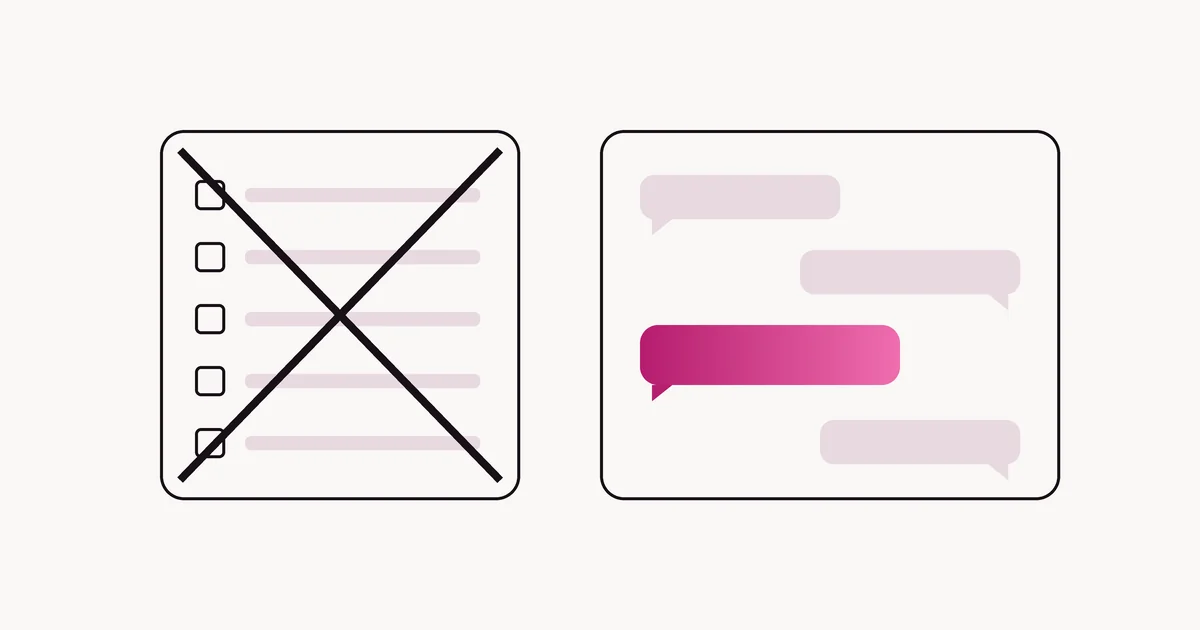
Why scripts fail, specifically
A script is a fixed sequence of messages sent regardless of what the fan wrote. That is the whole problem. Fans are not writing to a page; they are writing to a person, and the moment a reply does not connect to what they said, the person disappears. It takes about three messages. After that the fan either leaves or, worse, stays and never spends, because he has learned that nothing he writes is read.
The fans who spend most are the ones who spot it first, because they are the ones paying attention. A pasted opener, a “hey babe” that could have gone to anyone, a PPV pitch that arrives while he is telling you about his day: each one is a small tell, and the fan who notices three of them is gone. Our chatting service guide says the same thing from the buyer’s side: ask any service for conversation samples, and a script is obvious within three messages.
What a structure is instead
A structure is a set of moments a conversation passes through, and what a good reply does at each one. The words change every time, because they come from what the fan wrote and from the creator’s persona sheet. What stays fixed is the job of the reply.
- The open: the first message to a new subscriber. Its job is to get a reply, not a sale.
- The conversation: everything between the open and an offer. Its job is to find out what this fan is actually here for.
- The selling line: the one message that offers something. Its job is to describe one specific thing at the moment it is the natural next line.
- The no: the reply when a fan asks for something outside the boundary sheet. Its job is to keep the fan without moving the line.
- The re-open: the message to a fan who has gone quiet. Its job is to make him feel remembered.
Below is each moment with an example. The examples are written for this post to show the shape; they are not transcripts, and no real fan or creator is quoted. The creator’s side is written in a plain voice so the structure is visible; in practice it is written in hers.
The open
The rule is one real question and no offer. The question comes from something visible: what brought the fan here, the time of day, something on his profile if there is one. What it must not be is a pitch, a link, or a message that could have been sent to a hundred people, because it probably was, and he knows.
Example: “you found me from the reddit post didn’t you 👀 which one, the beach one?” That is the entire open. It gives him something easy to answer and tells him a person is reading. Compare the version that fails: a paragraph welcoming him, listing what is on the page, and ending with a locked set. He may unlock it. He will not reply to it.
The conversation
This is where most of the shift is spent and where a template has nothing to offer. The job is to learn what the fan is here for, because fans are not all here for the same thing: some want attention, some want a particular kind of content, some want to feel like a regular, some are lonely and want to talk. What sells to one is noise to another.
The technique is ordinary: ask, remember, refer back. A chatter working a managed account has the spending history and the previous chatter’s notes beside the conversation, so “how did the interview go” is possible on Thursday for something he mentioned on Monday. A solo creator can do the same with a note in the fan’s profile. The reply that refers to something real is worth more than any line anyone could write in advance.
The selling line
One message. It offers one specific thing, described so the fan can picture it, at the moment it is the natural next line of the conversation. Not before, and not as a broadcast that interrupts. The description is doing the selling, which is why our content-that-sells-in-messages piece spends so long on the one-sentence description.
Example: the fan has just said he liked tonight’s post. “that was the tame half honestly. the other eight from that set are sitting in your inbox if you want them 🙈” The set is named, it connects to what he just said, and it is one line. What fails is the same offer sent to the whole list at 9pm with “new content 🔥 unlock now”, or the same line pasted to a fan who wrote to say his dog died.
When the fan says no or “maybe later”, the structure says: accept it in one line and go back to the conversation. Not a second pitch, not a discount, not a guilt trip. A fan who was allowed to say no comes back; a fan who was chased does not.
The no
A fan asks for something on the boundary sheet, often with a number attached. The reply declines in the creator’s voice, warmly, without lecturing and without leaving the door open, and offers what is on the menu instead. Three things it never does: explain why, negotiate, or make him feel he did something wrong for asking.
Example: “haha no that one’s not on the menu and never will be, don’t take it personally 💛 but if you liked the red set there’s a video from the same day that might be more your thing”. He may sulk for a message. He is still here next week. On a managed account the creator never sees the request, because the boundary sheet already answered it; that is what the sheet is for, and it is why we publish the blank version on the service page.
The re-open
A fan who used to buy has gone quiet. The worst message to send him is the one everyone sends: a discount, a “miss you” that clearly went to a list, or a new PPV drop. The re-open is personal and offers nothing. It refers to something he said or bought, asks one question, and stops.
Example: “wait did you ever end up doing that trip to lisbon?? you were planning it forever”. If he replies, the conversation is back and the next sale will come from it in its own time. If he does not, nothing was lost. The fan who spent most on a mature account is usually one who was re-opened this way at least once.
How this becomes a persona, not a script
The five moments are the same on every account. What differs is the voice they are delivered in, and that is what the persona sheet holds: how she writes, what she calls people, her emoji habits, what she jokes about, how she says no. A chatter who has the sheet and the structure can write every message fresh and still sound like her across three shifts. A chatter who has a script sounds like the script.
If you write your own messages, the structure is yours to use as it is; a note per fan and a written list of your own boundaries will get you most of the way. Our guide for solo creators, how to reply to OnlyFans messages when you are doing it alone, covers the time problem that the structure does not solve. If you would rather have a team trained on it, apply and a manager will show you the persona sheet before anything is sent in your name.
Questions creators ask
Do OnlyFans chatters use scripts?
Bad ones do, and fans notice within a few messages. A trained team works from a structure, a set of moments a conversation passes through and what each reply has to do, and from a persona sheet that sets the creator’s voice. The words are written fresh every time from what the fan actually said.
What should the first message to a new OnlyFans subscriber say?
One real question and no offer. Something visible about how he arrived or what he might have seen, in the creator’s voice, short enough to answer in a second. Its job is to get a reply; a first message that pitches a locked set rarely gets one.
When should you send a PPV in a conversation?
When it is the natural next line: the fan has just reacted to a post, asked about a set, or said what he likes. Describe one specific thing in one message. Not in the first message, not straight after a purchase, not to a fan who wrote about something difficult, and not as a broadcast that interrupts a real conversation.
How do you say no to a fan without losing him?
Warmly, in one message, without explaining or negotiating, and with something from the menu offered instead. The decision was made in advance on a written boundary sheet, so the reply is never improvised under pressure and the line never moves for a number.
Want this handled for you?
Apply in two minutes and we will tell you exactly what we would change on your account.
See if you qualify